
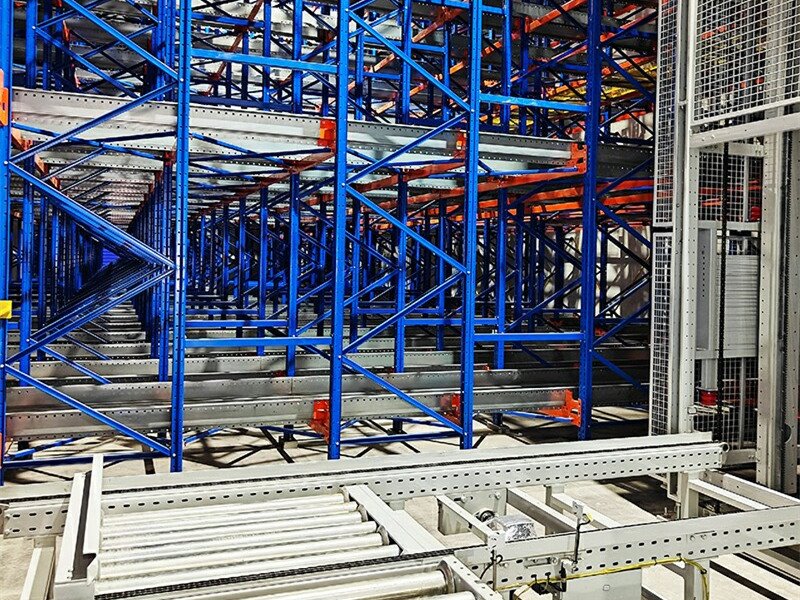
Map temperature boundaries first
Draw receiving, storage and dispatch with each environmental boundary marked. Identify doors, staging and inspection that interrupt movement. Record product handling requirements separately from equipment exposure: a room set point does not describe every condition during transition. Ask how loads arrive, how long they wait and whether packaging or pallet condition changes. Obtain confirmation from the operation and equipment engineers rather than assuming identical behavior in every zone. The diagram should show where identification and release decisions occur as well as the physical transfer path.
Qualify the complete configuration
Confirm environmental suitability for the proposed equipment, controls, sensors, power arrangement and maintenance procedure. A reference application does not qualify a new site. Request identifiable documentation describing the offered configuration, envelope and restrictions. Review conveyors, transfer devices and workstations as carefully as the main storage device; they may cross boundaries that the storage machine does not. Condensation, ice and packaging are topics for engineering assessment, not problems this article claims to eliminate. Keep unresolved qualifications explicit before procurement rather than relying on a broad cold-storage label.
Preserve load identity through transitions
Define where the load identifier is read, where it becomes inventory and what happens when a read fails. A rejected pallet needs a usable exception path. Follow a planned test load through receiving, transition, storage and dispatch, including a deliberate identification exception where appropriate. Agree the expected record at each step and which party authorises recovery. Traceability depends on the complete handoff, not merely the presence of software. The acceptance conditions and product handling policy are site-specific and require review by the responsible team.
Plan access and recovery
Identify which maintenance actions occur inside the cold area and which can be performed outside. Define how movement is stopped, how a load is inspected and how work resumes safely. Avoid using unmanned-operation language in place of these arrangements. Compare the zone-to-zone architecture and lifecycle scope, including operator preparation and environmental qualification. Capacity and recovery procedures need evidence for the selected configuration. Evaluate energy demand, equipment temperature limits and support arrangements against the selected configuration and operating profile. CoreLogis can coordinate the operating requirements with the appropriate technology support.