
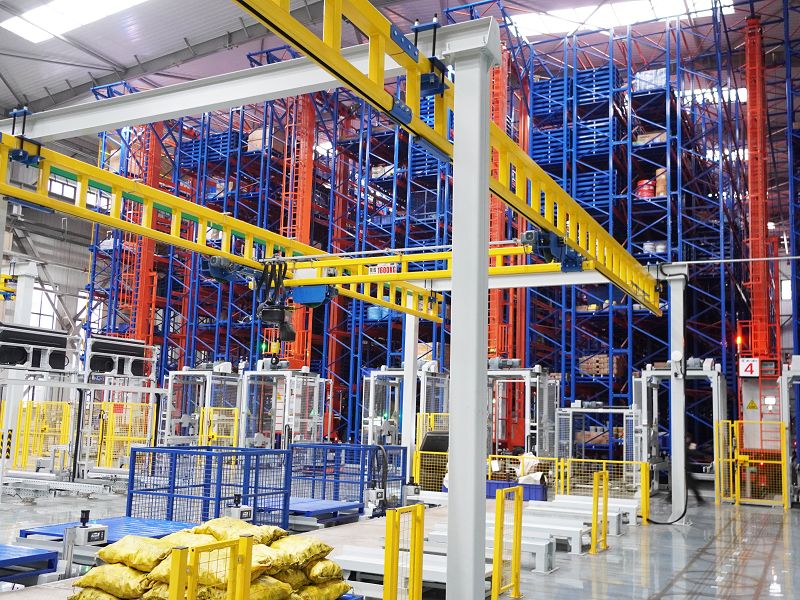
Survey the real constraints
Columns, services, floor condition and active work areas can change feasibility. Obtain verified dimensions and identify conditions requiring specialist assessment. Spare area is not necessarily installation-ready space. Observe receiving, replenishment, picking and dispatch during representative work. Review the systems already managing inventory. Distinguish layout, process and information problems before proposing equipment. Record what has actually been measured and which constraints remain assumptions; an attractive drawing should not be mistaken for a verified building survey.
Choose the boundary of change
Compare a focused storage or transfer intervention with a broader architecture using the same requirements. Define what stays manual, what becomes automated and how loads cross the boundary. Review staging, inspection and exception handling. Determine inventory ownership during each movement. A mixed operation needs accountable handoffs so an incomplete transfer does not leave a load without a known state. Modernization need not replace every process at once, but the temporary and final operating concepts must both be understandable.
Plan continuity and cutover
Discuss stock holding during installation, access to active areas and activities needing interruption. A phased approach helps only if its temporary operation is workable. The customer must confirm capacity and timing constraints. Develop a proposed cutover sequence with verification points, operator preparation and recovery arrangements. Separate that proposal from a confirmed schedule. Do not promise interruption-free migration or instant rollback. Identify what must be demonstrated before advancing to the next stage and who makes that decision.
Assess feasibility before return
A first assessment should identify options, evidence gaps and conditions that could stop the project. Evaluate configuration and cost after building, loads and interfaces are understood. Separate potential benefits from measured results. Compare total scope, maintainability, operational change and expansion. Build the investment comparison from measured baseline data, defined project scope and documented operating assumptions. CoreLogis starts with the warehouse problem and develops solution logic with appropriate technology support. CoreLogis assesses feasibility against the actual building, loads and interfaces at the proposed site.