
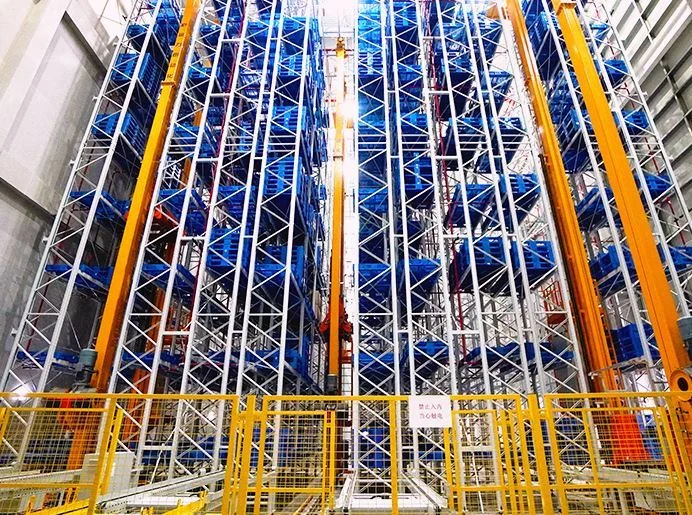
Define the complete load
The pallet, contents and presentation determine the handling envelope. Record stability, identification, dimensions and tolerances together. A nominal footprint does not describe overhang or a damaged base. Agree an inspection and rejection policy before automated entry. The appropriate method and values belong in the project engineering basis. Include the load variations operators actually encounter. An automated rack interface must accommodate the agreed envelope, not an ideal pallet that exists only in a diagram.
Coordinate rack and machine
Review clearances, transfer points and maintenance access as one system. A change to the rack can affect handling even if the location count remains unchanged. Identify responsibility for interface drawings and confirmation of building conditions, structural design and installation tolerances. Coordinate structural calculations and compliance review with the responsible engineers before accepting the rack-equipment interface. Ask how design changes are coordinated between suppliers, who accepts each interface and which documents define the final installation arrangement.
Work within the actual building
Survey height, columns, floor conditions, access routes and fire-protection interfaces before treating the site as an empty rectangle. Gross area differs from usable space for storage, staging and service. Dense storage still needs a workable receiving and dispatch flow. A conceptual layout compares options but does not replace verified site information. Review installation access and future maintenance. Record uncertain dimensions explicitly so a quotation cannot silently treat them as measured facts.
Evaluate access as well as capacity
Different depths and shuttle-compatible arrangements organise access differently. Choose against inventory and movement requirements, not location count alone. Compare sequence, presentation and recovery alongside capacity. Request a coordinated design package and acceptance basis for the rack-equipment interfaces. Manufacturer literature can inform selection, but suitability requires the configuration and responsible review. Confirm loading capacity, service access and maintenance requirements for the selected arrangement. CoreLogis can connect warehouse requirements to technology configuration and the engineering scope needed to substantiate the design.